

Most misunderstandings don’t start in the middle of a conversation. They start before it begins.
Before someone finishes their sentence, before the context is clear, before we’ve asked a single question, we have often already decided what they mean. We have a model of who they are, what they usually do, what they probably intended. By the time we respond, we are not always responding to what happened. We are responding to the story we arrived with.
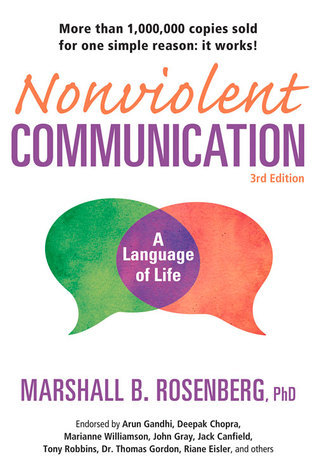
I didn’t have a name for this until I read Marshall Rosenberg’s Nonviolent Communication. The book gave me a word for something I’d been doing without noticing: evaluation. And a contrast I hadn’t considered: observation.
The Story We Tell About Others
An observation stays close to what actually occurred. “You said you’d call and didn’t.” An evaluation is already further away: “You never follow through.” Both describe the same event. Only one stays true to it. The other has already moved into interpretation, pattern, and character judgment, often without noticing the transition.
Rosenberg’s argument is that most of our communication is evaluation dressed as observation. We have been trained, from very early on, to assess and categorise. Schools grade. Workplaces rank. Families have long-running verdicts on who each person is and what they’re like. Quick, confident judgment feels like clarity. It often feels like wisdom. What it sometimes is, is a habit so practiced we’ve forgotten it’s a habit.
This matters because when we respond to a person, we’re usually responding to our interpretation of them. Which means we’re not quite in conversation with the person in front of us. We’re in conversation with the version of them we’ve already constructed.
Who We Assume Most About
The gap between what happened and what we made it mean tends to be widest with the people we know best.
With strangers, we are sometimes more open. We don’t have enough history to project onto them, so we stay more with what’s actually there. With the people closest to us, years of patterns, repeated dynamics, remembered disappointments, have built a very detailed model. That model can be useful. It can also be a wall between us and what is actually happening in this conversation, on this day.
Reading Nonviolent Communication, I recognised this in myself. Not as cruelty or closed-mindedness, just as the ordinary motion of a mind that has learned to be efficient. See the pattern, apply the label, respond accordingly. The problem is that people are not always behaving from the pattern we’ve identified. They are often behaving from something more specific: an unmet need, a difficult moment, a feeling they haven’t yet found words for.
Rosenberg’s suggestion is that before responding, we try to connect with what the other person might actually be feeling and needing. Not agreeing. Not absorbing everything without question. Just pausing long enough to ask: what is going on for them that I haven’t considered?
That pause is harder than it sounds. It requires holding your own reaction for a moment while you try to reach toward someone else’s experience. For people who have been through a lot with each other, this can feel almost counterintuitive. The history is right there. The conclusion is already drawn.
A Language We Inherited
What stayed with me most was the idea that this isn’t purely a personal failing. The way most of us were taught to communicate is built around evaluation. Right and wrong. Blame and justification. “You made me feel this way.” “They always do that.” “I had no choice.” These are not neutral descriptions of events. They are structures that move responsibility around without locating it anywhere useful, and they’re the default language of most of the institutions that shaped us.
The alternative Rosenberg proposes is a language that connects observation to feeling to need to request. It sounds formulaic when you write it out, and in practice it often feels clumsy at first, because it’s asking you to slow down in a situation where the impulse is to react quickly. But what it’s actually doing is asking a more honest question: what do I actually need here, and what am I actually asking for?
The same question can be turned toward the person in front of you. What might they actually be needing? What are they asking for, underneath what they said?
What It Doesn’t Fully Resolve
It would be dishonest to leave this without saying: this is genuinely difficult, and the book is tidier than real life. Real conversations happen when you’re exhausted, or when something old and sore has just been touched, or when the power between two people is not equal. The capacity to pause, observe, and listen with openness is not equally available to everyone in every situation. The framework assumes a level of stability that isn’t always there.
And some behavior does need to be named as harmful, not simply understood. There is a difference between empathy and tolerance, and Rosenberg’s book is sometimes easier to read as collapsing that distinction than it intends to be.
What it gave me, more than a method, was a specific kind of honesty: about how often I had already concluded what someone meant before really listening. Not out of hostility, but out of habit. The habit of arriving at a conversation with the answer already in hand.
That habit is worth noticing. The noticing doesn’t automatically change anything, but it creates a small amount of space where there wasn’t one before.
Reading Nonviolent Communication won’t resolve the difficulty of being in relationship with people. But it did make me more honest about how much of that difficulty I was contributing, not through ill intent, but through the simple habit of deciding what things meant before asking what they were
If you’ve read it, I’d be curious what landed most for you, and whether the gap between the theory and the practice felt as wide to you as it sometimes does to me.